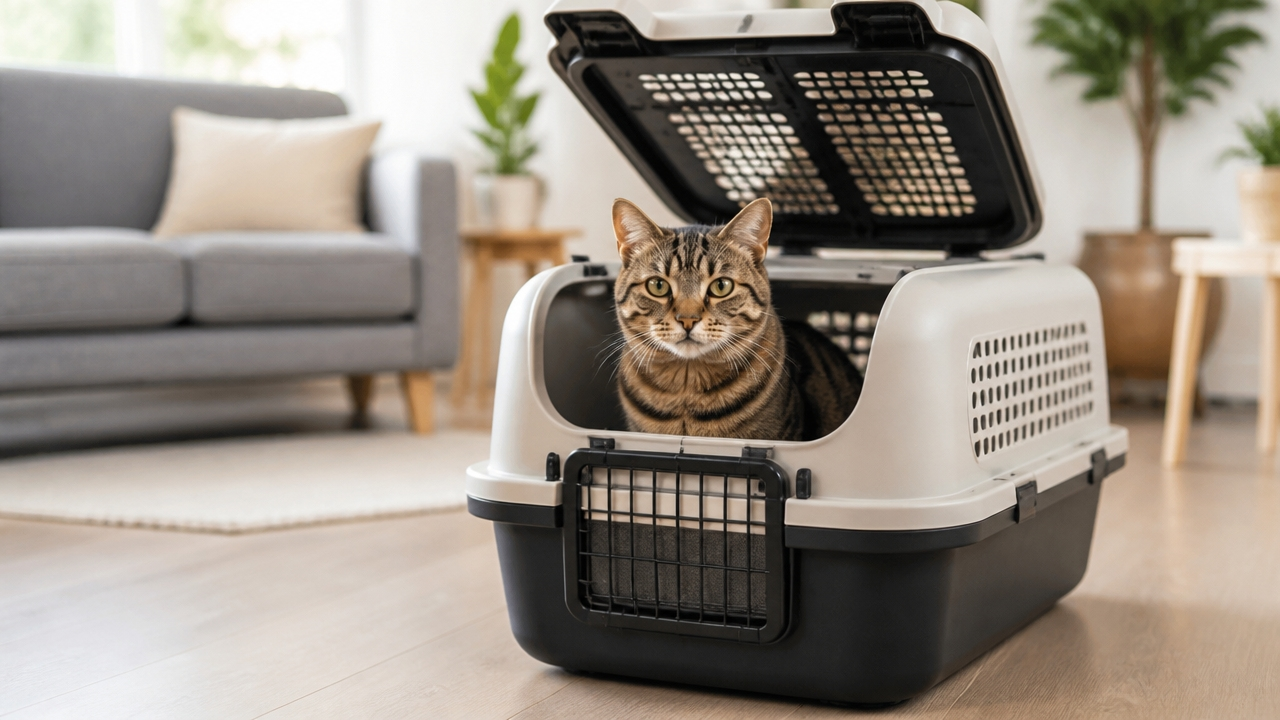
Last spring, a friend’s 12-pound tabby bolted from a flimsy carrier in the vet’s parking lot. It took twenty minutes to coax her out from under a car. You can avoid that scenario with the right carrier. I’ve picked five soft-sided options that fit different cats and budgets. One feature matters more than size or price, and most buyers overlook it until the car ride starts.
Extra Large Soft Sided Cat Carrier for 2 Cats

If you share your home with two cats, or one large cat that likes extra room, this Petseek Extra Large Cat Carrier is the one I’d look at first.
Quick summary:
- Size: 24″x16.5″x16″
- Holds: up to 55 pounds
- Openings: side, top, and front
Why I picked it: The frame collapses, and inner iron support keeps its shape. Oxford fabric wipes clean, and five mesh windows add airflow.
Closing recommendation: I’d pick this carrier for roomy, secure vet trips. It’s easy to clean, store, and carry. Measure your cats first, though.
Best For: Owners of two cats, or one large cat, who want a roomy, secure, easy-to-clean carrier for vet visits and car travel.
Pros:
Cons:
Pecute Cat Carrier Stable, Pet Carrier with Privacy Partition,Green

The Pecute Cat Carrier works best for nervous cats that need a place to hide. It fits pets up to 11 lbs and measures 16.9 by 11 by 11 inches.
Why I picked it: A 5mm steel wire frame and honeycomb board keep the shape from collapsing. You can lock every zipper, and an inner strap helps stop escapes.
Best For: Owners of nervous or shy cats and other pets up to 11 lbs who want a stable, collapsible carrier with a hiding zone for car travel and trips.
Pros:
Cons:
Cozy Comfort Carrier Large Light Blue Soft Cat Carrier

Large cats between 10 and 19 pounds fit well in the Cozy Comfort Carrier. It suits cats measuring 15 to 18 inches from head to tail.
Why I picked it: The heads-out design helps your cat feel less enclosed. You can carry it by the padded handle or shoulder strap, and a seat belt pass-through keeps it secure.
Best For: Owners of large cats weighing 10 to 19 pounds and measuring 15 to 18 inches from head to tail who want a soft, washable carrier that is comfortable to carry and easy to groom in.
Pros:
Cons:
Pecute Cat Backpack Carrier,Large Space Cat Bubble Backpack,Ergonomic,Gray

I picked the Pecute Cat Backpack Carrier for you if you walk or commute with a small cat. Its bubble design gives your cat space.
Why I picked it: The EVA backplate eases pulling on your back. Mesh lets air through, and locking zippers plus a safety leash keep your cat in. Pockets hold snacks and records.
Best For: Owners who walk or commute with a small cat weighing about 3-4 kg and want a ventilated, secure backpack carrier with room for the cat to move.
Pros:
Cons:
Cat Carrier for Travel, Soft-Sided, Top Loading, Privacy Curtain, to 20 lbs
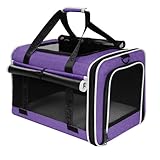
If your cat gets nervous on the road, this carrier is a calm, practical choice.
Quick summary: Size: 18L x 11W x 11H, fits pets up to 20 lbs.
Why I picked it: The roller shade creates a den-like space, and you can open it when your cat wants to look out. Self-locking zippers on the top and side keep your cat secure.
Best For: Owners of nervous cats or small dogs up to 20 lbs who need a lightweight, secure carrier for car rides, vet visits, and daily outings.
Pros:
Cons:
Factors to Consider When Choosing Cat Carriers for Vet Visits
Safety and security. Choose a carrier with sturdy latches and a locking door that a determined cat can’t push open. Metal or heavy-duty plastic doors are more escape-proof than zippers on soft carriers.
Top-loading access. A carrier with a top opening lets you lift your cat out gently instead of pulling a scared one through a small front door. Carriers where the top half detaches are even better, because the vet can examine your cat in the bottom half.
Hard vs. soft. Hard-sided carriers are more protective, easier to clean, and better for car travel. Soft carriers are lighter and easier to carry but offer less protection, so they suit calm cats and short trips better.
Size. Your cat should be able to stand, turn around, and lie down comfortably, but a carrier that is too large can make them slide around during transport. Large cats need extra room.
Ventilation and visibility. Look for ventilation on several sides to keep your cat cool and calm. Some cats feel safer with a covered or dark interior, so a towel over the carrier can help.
Ease of cleaning. Accidents are common when cats are stressed, so choose a carrier with a smooth interior and removable parts, plus a washable pad or liner.
Comfort. A soft blanket or pad, ideally one that smells like home, helps your cat settle. A pheromone spray can also reduce stress.
Car safety. Make sure the carrier can be secured with a seatbelt or placed on the floor behind a seat so it doesn’t slide or tip during the ride.
Portability. A comfortable handle, a shoulder strap, and a manageable weight make it easier to carry your cat, particularly if you take public transport.
Acclimation. Leave the carrier out at home with treats and bedding inside so your cat sees it as a safe space, not a sign of a vet visit.